
11 Japanese Lifestyle Habits That Can Improve Your Daily Life Naturally
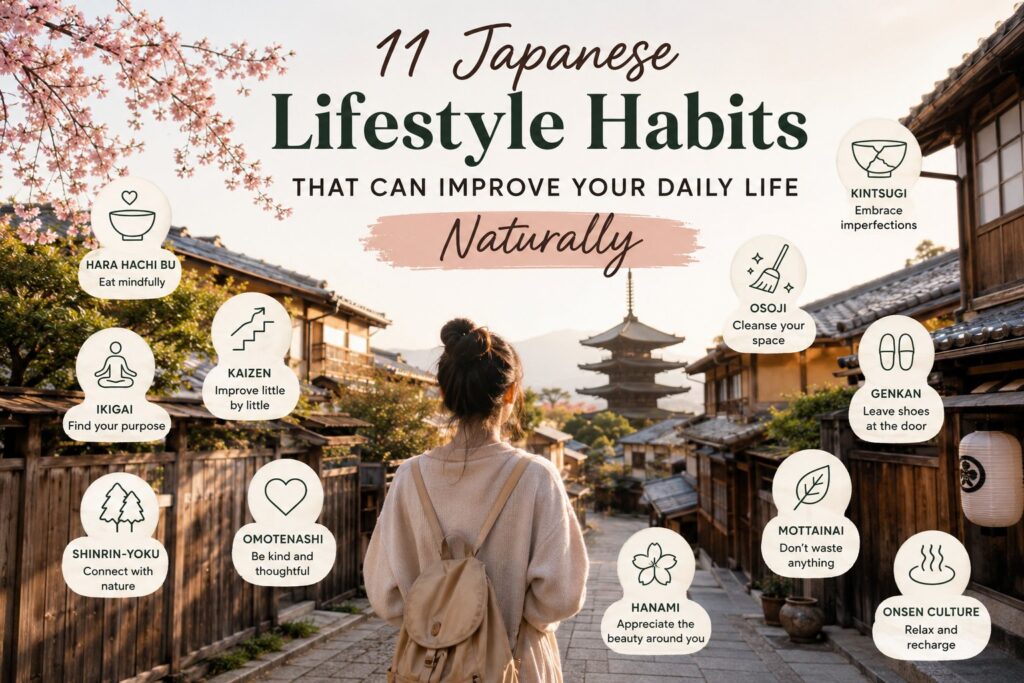
Have you ever wondered why Japan is often associated with long life, clean cities, and a calm way of living? I used to think it was all about sushi, anime, and cherry blossoms. But the more I read about the Japanese way of living, the more I realized it’s their everyday habits that truly make a difference.
As a college student, my life can get pretty chaotic. Between assignments, exams, late-night scrolling, and trying to balance everything, I often feel overwhelmed. That’s why learning about these Japanese lifestyle habits really caught my attention. What I love most is that they aren’t about expensive products or impossible routines. They’re simple habits that anyone can start, no matter how busy life gets.
In this blog, I’m sharing 11 unique habits that are deeply rooted in Japanese culture. You don’t have to move to Japan to try them—you can easily bring a little bit of the Japanese culture lifestyle into your own daily routine.
Let’s dive in!
1. Hara Hachi Bu – Eat Until You’re 80% Full
One of the most famous healthy Japanese habits is Hara Hachi Bu, which means eating until you’re about 80% full instead of overeating.
Rather than stuffing themselves, many Japanese people stop eating when they feel comfortably satisfied. This helps improve digestion and prevents unnecessary weight gain.
Why you should try it:
- Prevents overeating
- Improves digestion
- Encourages mindful eating
2. Ikigai – Find Your Reason to Wake Up
If you’ve ever searched for the Ikigai meaning, you’ll know it refers to having a purpose in life.
Your Ikigai doesn’t have to be something huge. It could be studying for your dream career, writing blogs, painting, or simply spending time with people you love. Having something meaningful to look forward to makes everyday life feel more fulfilling.
Benefits:
- Increases motivation
- Reduces stress
- Gives life direction
3. Shinrin-yoku – Forest Bathing
Don’t worry—you don’t actually take a bath in the forest!
Shinrin-yoku, also known as forest bathing, means spending quiet time surrounded by nature. In Japan, people visit forests and parks to relax, breathe fresh air, and disconnect from technology.
Even a short walk in a nearby park can refresh your mind after a stressful day at college.
Benefits:
- Reduces anxiety
- Improves focus
- Boosts mental well-being
4. Kaizen – Improve a Little Every Day
The Kaizen method teaches that small improvement every day leads to big results over time.
Instead of trying to study for eight hours in one day, start with just 30 minutes. Tiny, consistent steps are much easier to maintain than huge changes.
Benefits:
- Builds discipline
- Creates lasting habits
- Makes goals less overwhelming
5. Omotenashi – Kindness Without Expecting Anything Back
Omotenashi is the Japanese philosophy of selfless hospitality.
Whether it’s welcoming guests, helping a stranger, or simply being polite, kindness is offered without expecting a reward. I think this is something we could all practise more often.
Simple ways to follow it:
- Be punctual
- Help friends genuinely
- Treat everyone respectfully
6. Kintsugi – Finding Beauty in Imperfection
One of the most beautiful parts of the Japanese culture lifestyle is Kintsugi, the art of repairing broken pottery with gold.
Instead of hiding cracks, they celebrate them. It reminds us that our mistakes, failures, and struggles don’t make us weak—they make us unique.
Whenever I don’t score well in an exam, I try to remember that one setback doesn’t define my future.
7. Osoji – The Tradition of Deep Cleaning
At the end of every year, many Japanese families practise Osoji, a thorough cleaning of their homes, schools, and workplaces.
It isn’t just about removing dust. It’s also about clearing your mind and starting fresh.
As a student, I noticed that cleaning my study table actually helps me concentrate better.
8. Genkan – Leaving Shoes at the Door
In Japanese homes, there’s a special entrance area called the Genkan, where everyone removes their shoes before entering.
This simple habit keeps homes cleaner and symbolically leaves outside dirt and stress behind.
It’s such an easy habit that anyone can adopt.
9. Mottainai – Don’t Waste Anything
The Mottainai meaning is all about respecting resources and avoiding waste.
Whether it’s food, clothes, electricity, or water, Japanese people believe everything has value.
This habit has made me think twice before wasting leftovers or buying things I don’t actually need.
10. Hanami – Appreciating Nature
Every spring, people in Japan celebrate Hanami, the tradition of enjoying cherry blossoms with family and friends.
The idea isn’t just to admire flowers but to slow down and appreciate the beauty of the present moment.
Even if you don’t have cherry blossoms nearby, you can enjoy a sunset, visit a park, or simply spend time outdoors.
11. Onsen Culture – Relaxing Through Hot Springs
Japan is famous for its natural hot springs, known as Onsen.
For many Japanese people, soaking in warm mineral-rich water isn’t just about bathing—it’s a way to relax both physically and mentally.
Even if you don’t have access to an onsen, taking a warm bath after a long day can help reduce stress and improve sleep quality.
Final Thoughts
What I love most about these Japanese lifestyle habits is that they aren’t about perfection. They’re about making small, meaningful choices every day.
You don’t need to adopt all eleven habits at once. Start with one that feels easiest—maybe eating until you’re 80% full, spending more time in nature, or improving yourself by just 1% each day.
Sometimes the smallest habits create the biggest changes. And who knows? A little inspiration from the Japanese way of living might be exactly what you need to live a healthier, happier, and more balanced life.
FAQs
1. What are the most popular Japanese lifestyle habits?
Some of the best-known Japanese lifestyle habits include Hara Hachi Bu, Ikigai, Kaizen, Shinrin-yoku, Mottainai, Kintsugi, and Omotenashi.
2. Why do Japanese people live such long lives?
Experts believe their longevity is influenced by balanced eating, active lifestyles, strong social connections, mindfulness, and healthy daily routines.
3. Can I practise Japanese lifestyle habits outside Japan?
Yes! Most Japanese daily habits, such as Kaizen, Ikigai, and Hara Hachi Bu, can easily be incorporated into everyday life no matter where you live.
4. Which Japanese habit is easiest to start with?
Kaizen is one of the easiest because it encourages making one small improvement every day instead of trying to change everything at once.