15 Best Ingredients for Sensitive Skin That Actually Calm Irritation
If you’re anything like me, you’ve probably bought a skincare product because everyone on Instagram was obsessed with it… only to end up with itchy, red skin the next morning. Trust me, I’ve been there.
Having sensitive skin can feel frustrating because you never know what your skin is going to react to. One new serum can leave your face glowing, while another can make it burn within minutes. That’s why I stopped chasing every skincare trend and started paying attention to the ingredients instead.
Once I learned which ingredients actually help sensitive skin, my skincare routine became much simpler and my skin became much happier.
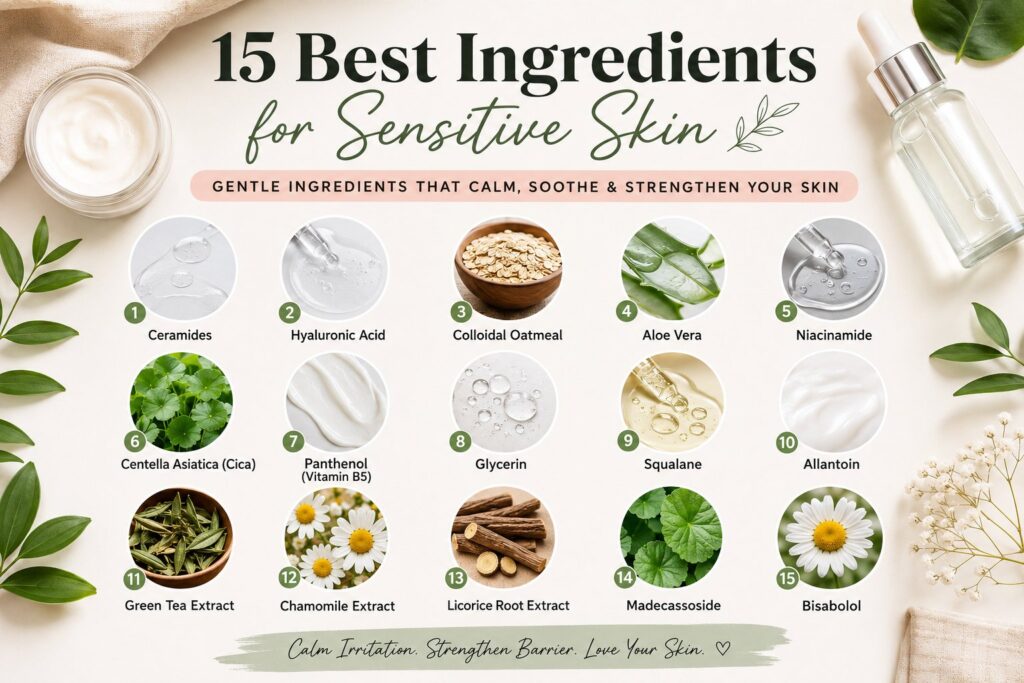
So if you’re confused about what products to buy, don’t worry. In this guide, I’ll share the best ingredients for sensitive skin that help calm irritation, reduce redness, and keep your skin healthy without making things worse.
What Does Sensitive Skin Need?
Sensitive skin usually has a weaker skin barrier, which means it’s easier for irritants, pollution, and harsh skincare products to cause redness, dryness, itching, or burning.
Instead of using strong active ingredients every day, focus on products that:
- Hydrate the skin
- Repair the skin barrier
- Reduce inflammation
- Lock in moisture
- Protect against environmental damage
Let’s look at the ingredients that actually do all of that.
1. Ceramides
If I had to recommend just one ingredient for sensitive skin, it would definitely be ceramides.
Ceramides are natural fats already found in our skin. They help keep moisture inside while protecting the skin from pollution, bacteria, and irritation. When your skin barrier gets damaged, ceramides help repair it.
Why it’s great
- Strengthens the skin barrier
- Prevents moisture loss
- Reduces dryness
- Helps irritated skin heal faster
Best for: Dry, sensitive, and damaged skin.
2. Hyaluronic Acid
Despite the word “acid,” this ingredient is incredibly gentle.
Hyaluronic acid attracts water into your skin, making it feel soft, smooth, and hydrated without feeling greasy.
When your skin stays hydrated, it becomes less likely to feel tight or irritated.
Benefits
- Deep hydration
- Plumps the skin
- Reduces dryness
- Makes skin feel smoother
Best for: All skin types, especially dehydrated sensitive skin.
3. Colloidal Oatmeal
This ingredient is basically comfort food—but for your skin.
Colloidal oatmeal has been used for years to calm eczema, itching, and irritated skin. It forms a protective layer that locks in moisture while reducing inflammation.
Benefits
- Instantly soothes irritation
- Relieves itching
- Repairs the skin barrier
- Softens rough skin
4. Aloe Vera
Whenever my skin feels irritated after being out in the sun, aloe vera is one of the first things I reach for.
It contains vitamins, minerals, and antioxidants that help cool inflamed skin.
Benefits
- Reduces redness
- Calms irritation
- Hydrates naturally
- Supports healing
Choose products with pure aloe vera and minimal added fragrance.
5. Niacinamide
Niacinamide is one of those ingredients that almost every dermatologist recommends.
It helps reduce redness, strengthens the skin barrier, controls excess oil, and even fades post-acne marks over time.
The good news? Most people with sensitive skin tolerate it very well.
Benefits
- Reduces redness
- Improves skin barrier
- Minimises enlarged pores
- Evens skin tone
6. Centella Asiatica (Cica)
You’ll often see this ingredient in Korean skincare.
Centella Asiatica, also called Cica, is famous for calming irritated skin. It helps repair damaged skin while reducing inflammation.
Benefits
- Calms redness
- Speeds up healing
- Repairs the skin barrier
- Reduces irritation
7. Panthenol (Vitamin B5)
Panthenol works like a drink of water for dry skin.
It attracts moisture while making the skin feel soft and comfortable.
Benefits
- Deep hydration
- Helps repair damaged skin
- Reduces dryness
- Improves skin elasticity
8. Glycerin
Sometimes the simplest ingredients work the best.
Glycerin is a powerful humectant that draws moisture into the skin, making it look healthier and feel smoother.
Benefits
- Hydrates skin
- Prevents moisture loss
- Keeps skin soft
- Supports skin barrier
9. Squalane
If heavy moisturisers make your skin feel greasy, squalane is a great alternative.
It’s lightweight, non-comedogenic, and closely resembles your skin’s natural oils.
Benefits
- Moisturises deeply
- Doesn’t clog pores
- Softens skin
- Protects against dryness
10. Allantoin
Allantoin is another underrated ingredient that deserves more attention.
It gently soothes irritated skin while encouraging healthy skin renewal.
Benefits
- Calms irritation
- Reduces redness
- Softens rough patches
- Supports healing
11. Green Tea Extract
Green tea isn’t just good for your body—it’s amazing for your skin too.
Rich in antioxidants, it helps protect your skin from environmental damage while reducing redness.
Benefits
- Powerful antioxidant
- Reduces inflammation
- Controls excess oil
- Protects skin
12. Chamomile Extract
Chamomile is known for its calming properties, and your skin loves it just as much as your body does.
Benefits
- Soothes irritation
- Reduces redness
- Calms sensitive skin
- Supports healing
13. Licorice Root Extract
If redness and uneven skin tone bother you, licorice root extract is worth trying.
It naturally brightens the skin while calming inflammation.
Benefits
- Reduces redness
- Brightens complexion
- Soothes irritation
- Helps fade dark spots
14. Madecassoside
Madecassoside comes from Centella Asiatica and is often found in products designed for extremely sensitive skin.
Benefits
- Repairs damaged skin
- Reduces inflammation
- Strengthens the skin barrier
- Improves healing
15. Bisabolol
This gentle ingredient is commonly derived from chamomile.
It works wonderfully for calming irritation caused by harsh weather, over-exfoliation, or strong skincare products.
Benefits
- Soothes redness
- Reduces irritation
- Supports skin healing
- Leaves skin feeling comfortable
Ingredients Sensitive Skin Should Avoid
Just as important as knowing what to use is knowing what to avoid.
If your skin reacts easily, try limiting products that contain:
- High amounts of alcohol
- Artificial fragrance
- Essential oils in high concentrations
- Harsh physical scrubs
- Sodium Lauryl Sulfate (SLS)
- Strong denatured alcohol
- Overuse of glycolic acid
- High-strength retinol (unless introduced slowly)
Always patch-test a new product before applying it to your whole face.
Simple Sensitive Skin Routine
You don’t need a 10-step skincare routine.
Here’s what I would recommend:
Morning
- Gentle cleanser
- Hydrating serum with hyaluronic acid
- Ceramide moisturiser
- Broad-spectrum SPF 30 or higher
Night
- Gentle cleanser
- Niacinamide or Centella serum
- Moisturiser with ceramides and panthenol
Keeping your routine simple often works better than constantly trying new products.
Final Thoughts
Sensitive skin doesn’t have to be complicated. I used to think I needed expensive products or complicated routines, but honestly, understanding ingredients made the biggest difference.
If you’re just starting out, look for products with ceramides, hyaluronic acid, Centella Asiatica, niacinamide, panthenol, glycerin, squalane, and colloidal oatmeal. These ingredients help strengthen your skin barrier, reduce redness, and keep your skin calm and hydrated.
Remember, skincare isn’t about having the most products—it’s about choosing the right ones for your skin. Once you focus on gentle, dermatologist-recommended ingredients for sensitive skin, you’ll likely notice healthier, happier skin over time.
FAQs
What are the best ingredients for sensitive skin?
Ceramides, hyaluronic acid, niacinamide, Centella Asiatica, colloidal oatmeal, panthenol, glycerin, squalane, aloe vera, and allantoin are among the best ingredients for sensitive skin.
Which ingredient reduces redness quickly?
Centella Asiatica, colloidal oatmeal, aloe vera, chamomile, and niacinamide are well known for helping calm redness and irritation.
Is niacinamide good for sensitive skin?
Yes. Niacinamide is generally well tolerated and helps strengthen the skin barrier, reduce redness, improve uneven skin tone, and support healthy skin.
Can sensitive skin use hyaluronic acid?
Absolutely. Hyaluronic acid is a gentle hydrating ingredient that attracts moisture to the skin and helps prevent dryness without causing irritation.
What should people with sensitive skin avoid?
Avoid products with strong fragrances, harsh alcohols, SLS, abrasive scrubs, and introducing multiple strong active ingredients at the same time.